Basketball Club Teams San Diego and the Power of Consistent Training
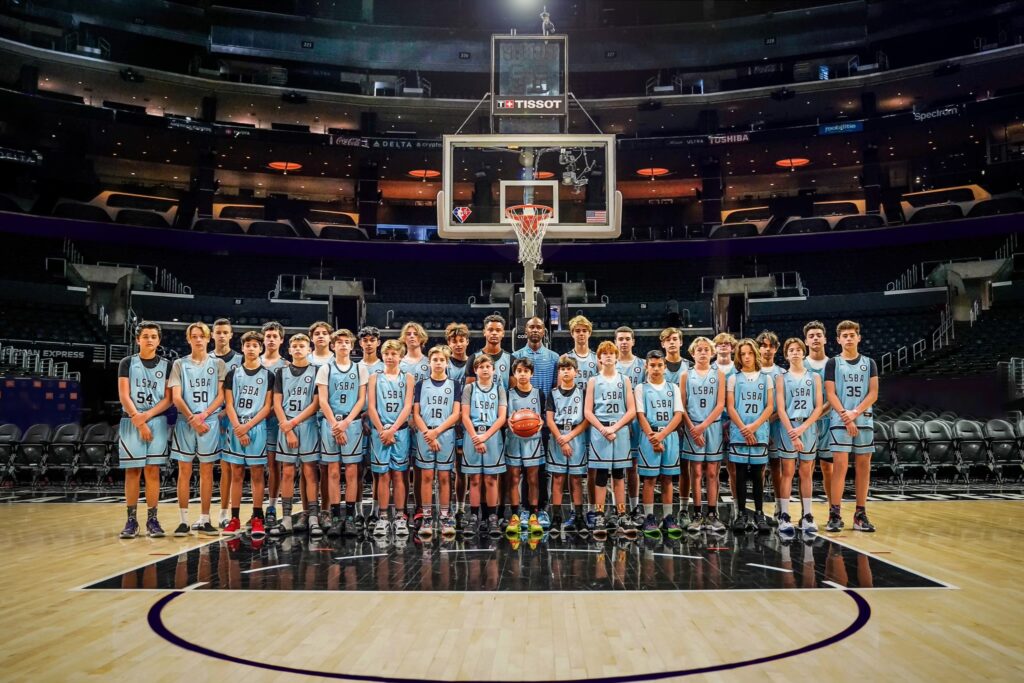
The gap between a promising young player and a reliable one is rarely talent alone. In youth basketball, especially in a deep and competitive market like San Diego, the real separator is consistency. A player who trains with purpose week after week usually surpasses the player who flashes brilliance once in a while. Coaches see it. Teammates feel it. College recruiters, when they are watching closely, recognize it too.
That is why conversations about Basketball Club Teams San Diego eventually circle back to one thing: training habits. Not social media highlights. Not one explosive tournament weekend. Not the occasional 25 point game that gets shared around. What matters over time is how often a player shows up ready to work, how well they absorb coaching, and whether their skill level keeps rising month after month.
San Diego has no shortage of basketball ambition. The county is full of players balancing school teams, club schedules, private workouts, strength work, and family life. The weather allows near year round activity, which helps, but it also creates a trap. Because there are so many chances to play, some athletes confuse playing a lot with developing a lot. Those are not the same thing. Games test skill. Training builds it.
Why club basketball in San Diego demands structure
San Diego is an interesting basketball environment because it combines several layers of competition. There are strong public school programs, private school programs, travel circuits, regional tournaments, and year round skill training options. A motivated athlete can stay busy every month of the year. That is a benefit, but it can also expose weak routines.
I have seen players enter the club scene thinking the answer is simply joining a respected team, attending every tournament, and hoping improvement follows. It rarely works that way. Club basketball can accelerate development, but only when the athlete uses the environment correctly. A strong team gives players reps under pressure, better coaching, and tougher opponents. It does not magically fix footwork, ball security, finishing angles, defensive stance, or shooting consistency.
That distinction matters in San Diego because the basketball calendar gets crowded quickly. Families often spend substantial money on club dues, travel, uniforms, and training sessions. If the player is not training consistently between events, the return on that investment drops fast. The athlete may gain exposure, but exposure without readiness can backfire. Coaches at the next level do not reward effort alone. They notice who can actually play.
The best Basketball Club Teams San Diego families understand this early. They stop treating basketball as a series of showcases and start treating it as a long season of habits.
Consistency is not glamorous, but it changes everything
There is nothing flashy about a player who gets extra shooting reps on a Tuesday night, works on weak hand finishes on Thursday, and revisits closeout footwork again on Saturday morning. No crowd sees that part. No one posts the hundredth form shot that looked exactly like the ninety ninth. Yet that boring work is where games are won later.
Consistent training does three important things that occasional hard work cannot replicate.
First, it protects mechanics under pressure. A jump shot often looks smooth in an empty gym. The real test comes late in a game, after sprinting back on defense, with tired legs and a fast closeout in front. Players who have repeated sound mechanics hundreds of times can still find balance in that moment. Players who train in bursts usually cannot.
Second, consistent training sharpens decision making. Basketball is fast, and good decisions depend on pattern recognition. Repetition helps players identify the tag defender, anticipate the second rotation, and understand when a simple pass is better than a forced shot. This is why film and live repetition work best together. One teaches recognition, the other tests it in motion.
Third, steady training builds confidence that is rooted in evidence. Real confidence is not loud. It is calm. It shows up when a player misses two early shots and still trusts the next one. It shows up when a guard gets pressured full court and does not panic. That kind of confidence usually comes from preparation, not personality.
The biggest mistake young players make
Many young athletes measure progress by what happens in games. That seems logical at first, but it is incomplete. Games are too noisy. Matchups vary. Minutes fluctuate. Roles change. One weekend a player might get 18 shots, the next they may touch the ball less because the opponent traps hard or the team is experimenting with lineups.
A better measure is whether the player's habits are creating repeatable improvement. Is their handle tighter than six weeks ago? Are they finishing through contact more effectively? Are they reading help defense faster? Has their shot preparation improved? Are they defending without crossing their feet? These questions tell the truth more reliably than one box score.
I once watched a young wing in San Diego struggle for most of a spring travel season. Parents around him focused on points and assumed his year had stalled. His coach saw something different. The player's footwork on catches had improved, his body language stabilized, and he had stopped drifting on corner threes. By midsummer, those invisible gains started to show. He was shooting a better percentage, turning the ball over less, and defending stronger perimeter scorers without fouling. From the outside it looked like a sudden breakthrough. It was not sudden at all. It was delayed visibility.
That is how development often works. The improvement is real before it becomes obvious.
What consistent training actually looks like
When people hear the phrase consistent training, they often imagine endless hours in the gym. That is not realistic for most families, and it is not necessary. The better model is regular, focused work with a clear purpose.
A middle school player in club basketball might benefit from three to five quality basketball touches per week, depending on school demands and physical maturity. A high school player with bigger goals may need a more layered routine that includes team practice, individual skill sessions, shooting volume, mobility, and strength work. The exact schedule varies, but the common thread is rhythm. Players improve when their week has structure.
For skill work, quality matters more than random volume. Fifty game speed catch and shoot reps with disciplined footwork matter more than casually launching 300 shots with tired mechanics. Fifteen minutes of tight ball handling with constraints can matter more than half an hour of freestyle dribbling that never challenges weak habits. Good training has intention built into it.
In strong club settings, this is where coaching makes a major difference. Experienced coaches do not just run players through drills. They connect the drill to game function. If a guard struggles to reject a ball screen, training should address hip angle, pace change, shoulder positioning, and the read after turning the corner. If a post player catches too deep and brings the ball low, work should target base, timing, and quick decisions before the defense loads up. Players improve faster when they know why they are doing something.
San Diego's basketball calendar rewards prepared players
The tournament environment around Southern California can be unforgiving. Teams may play several games across a weekend. Legs get heavy. Attention slips. Players are asked to adjust to unfamiliar gyms, early mornings, uneven officiating, and opponents who may play very different styles from week to week. One team presses full court. Another zones on every possession. Another switches everything and dares you to read mismatches correctly.
This is where consistent training shows up most clearly. Prepared players tend to be steadier across the entire weekend. They do not need perfect conditions to contribute. Their feet are ready on catch and shoot opportunities. Their defensive habits survive fatigue. Their passing remains simple and sharp even when the pace gets frantic.
Less prepared players often have one big game followed by two rough ones. Fatigue exposes them. Their shot mechanics drift. They stand upright defensively. Their handle rises. They force drives into crowds because they are late reading the help. Parents sometimes misread this as a confidence issue. Often it is a preparation issue.
That matters for Basketball Club Teams San Diego because club events are not isolated. Coaches build trust over time. If an athlete consistently looks dependable by the third game of the day, they earn minutes. If they routinely fade after the first burst of energy, coaches notice that too.
Skill development and role development are not the same
One of the more subtle challenges in club basketball is balancing long term growth with short term team roles. A player may be capable of more than what the team currently asks them to do. Maybe a forward can handle the ball but is mostly used as a rebounder and finisher. Maybe a point guard has a scoring package but is being asked to organize the group first.
This is where many families get frustrated, and not always without reason. Still, the healthiest approach is usually more nuanced than simply chasing a team that promises a bigger role. A player needs both role discipline and private growth.
Club games are not always the place to experiment freely. Training sessions are where players should expand their range. A wing who is mostly spotting up on weekends can still spend weekdays developing pick and roll reads, pull ups, and change of pace handling. A post player who is rim running in games can still work on face up counters and short roll passing during the week. Over time, if the skill becomes reliable, the role often expands naturally.
The reverse is also true. Some players demand a bigger game role before their training habits justify it. They want more touches, more freedom, more responsibility. Yet their shot selection is loose, their turnover rate is high, or their off ball defense is inconsistent. Club coaches usually respond to what they can trust, not what players say they want.
The body has to keep up with the ambition
Consistent training does not mean nonstop intensity. Smart development includes recovery, movement quality, and age appropriate strength work. This is one of the most important conversations in youth basketball right now because so many young athletes are overloaded.
San Diego players often stack school practices, club practices, weekend tournaments, and extra sessions. On paper it looks committed. In reality it can become too much. When an athlete's knees are sore, their ankles are unstable, and their sleep is poor, more basketball is not automatically better basketball.
A well run development plan respects the body. That means monitoring volume, teaching landing mechanics, building core and hip strength, and making recovery a real part of the routine. Sometimes the smartest training decision is shortening a workout and protecting quality. Sometimes it means skipping an extra run and addressing mobility instead.
The players who stay healthy long enough to improve usually have adults around them who understand this balance. Burnout is not always dramatic. Sometimes it arrives as flat practices, low enthusiasm, or nagging pain that never fully leaves. Consistency only helps if it is sustainable.
What parents should look for in a club environment
Parents often ask what separates a solid club team from one that truly develops players. The answer is rarely found in branding. It shows up in the daily standards.
A good development environment usually has a few consistent traits.
- Practices have purpose, not just activity.
- Coaches correct details, not only effort.
- Players are taught how to play, not just where to stand.
- Communication with families is honest about roles and growth.
- Improvement is tracked over months, not judged by one weekend.
That does not mean every strong coach is polished in the same way. Some are more intense. Some are more measured. Some teach with high structure, others with more read and react freedom. The key is whether the program can explain how it develops players and then demonstrate that process over time.
For parents navigating Basketball Club Teams San Diego, this matters because the marketplace can be noisy. Many programs can produce a good weekend. Fewer can produce steady improvement across a year. The difference is usually in the training culture.
The mental side of consistency
Basketball development is emotional. Young athletes tie a lot of identity to performance, especially once club play gets serious. They compare minutes, shoes, attention, rankings, and social media clips. A bad weekend can feel bigger than it is. A good one can create false security.
Consistent training stabilizes this. It gives players a place to return when emotions swing. If a shooter goes cold for a stretch, they can rely on their routine. If a player loses minutes, they can respond with targeted work instead of panic. This is one of the healthiest benefits of disciplined preparation. It shifts attention away from drama and back toward controllable actions.
Coaches can help by framing progress correctly. Instead of only praising outcomes, they should also praise transferable habits. Sprinting into a catch. Getting two feet down in the lane before making a pass. Talking early on defense. Pursuing the second effort rebound. These details do not always trend online, but they win possessions.
I have seen players transform simply because someone taught them to value the right things. Once they understood that consistency itself was a skill, not just a personality trait, their whole approach changed.
When more training is not the answer
There is a point where adding sessions stops helping. This is worth saying clearly because motivated families sometimes assume every slump can be solved by packing the week tighter. Often the better answer is not more work, but better targeted work.
If a player's shot is flattening late in games, the issue may be leg fatigue or poor lower body sequencing, not a lack of shot attempts. If a guard struggles against pressure, the answer may be footwork and poise under contact, not ten extra dribbling drills. If a player disappears offensively, the root problem may be spacing awareness or off ball timing rather than a lack of aggression.
Good coaches diagnose before prescribing. They know the difference between a player who needs more reps and one who needs cleaner reps. This is where experience matters. It is easy to exhaust a young athlete with activity. It takes more skill to build them carefully.
How players can build a week that actually works
The best routines are realistic. A strong weekly rhythm does not have to be perfect, but it basketball club teams should include enough repetition to create momentum. For most club players, that means some blend of team practice, focused individual work, shooting, body care, and rest. What matters is that the work connects.
A useful week often includes one or two sessions centered on pure skill development, one or two periods of shooting with tracked makes and game pace movement, team practices that reinforce reads and role responsibility, and at least some attention to mobility, sleep, and recovery. If the athlete is in season for school as well, the plan needs to be adjusted. Piling everything together without regard for fatigue usually hurts performance.
The strongest players I have been around did not always train the longest. They trained the most faithfully. They knew what they were working on, they understood why it mattered, and they stayed with it long enough to let the gains take hold.
What this means for the future of a player
Not every athlete in club basketball is chasing college basketball, and that should be said plainly. For many families, the goal is skill growth, strong competition, friendships, discipline, and a meaningful sports experience. Those are worthwhile outcomes. Still, the same principle applies whether the goal is varsity contribution or scholarship level play. Consistency drives progress.
The player who trains with discipline tends to become more coachable because they understand process. They become more adaptable because they have built more tools. They become more resilient because their confidence is earned. These qualities travel well beyond youth basketball.
That is the real power behind strong club development. Basketball teaches young people how to do hard things repeatedly without immediate reward. It teaches patience with detail. It teaches them to separate mood from commitment. Those lessons matter in school, work, and life as much as they matter in a crowded gym on a Sunday afternoon.
San Diego will continue to produce talented players. It has the gyms, the coaches, the weather, and the competitive base for that. But talent alone will never be enough, not in a region this deep. The players who move ahead are usually the ones who treat training as a habit rather than an event. They do not wait to feel inspired. They build routines that carry them when motivation dips. They trust the slow accumulation of good work.
That is why the best stories in Basketball Club Teams San Diego are rarely about overnight success. They are about players who kept showing up, kept refining details, and kept training long after the easy excitement wore off. Over time, that kind of consistency stops looking ordinary. It starts looking like leadership, reliability, and real basketball maturity.
Lamont Smith Basketball Academy
888 Clairemont Mesa Blvd Suite T-2, San Diego, CA 92123
(619) 639-8778
FAQ About Basketball Club Teams San Diego
How can a player join an LSBA club team?
Players are evaluated during practices so the coaching staff can recommend an appropriate team and development level. Families should contact the academy to confirm current openings and evaluation details.
Are club teams available for newer basketball players?
Yes. LSBA describes multiple levels, including a developmental option for newer players as well as more competitive teams for athletes with prior club experience.
What do LSBA club team practices emphasize?
Practices emphasize basketball fundamentals, team defense, structure, communication, and player development. The specific focus may vary according to the team and experience level.
Do all LSBA teams travel?
Travel expectations vary by level. Some teams focus on local competition, while advanced teams may participate in tournaments elsewhere in Southern California or beyond. Families should confirm the current schedule before enrolling.